
General Course

Course description
Eager to learn Spanish, but don’t have the time for an intensive course? Our three-hour weekly Spanish course could be the perfect fit for you! Covering all aspects of the language, this course offers a more manageable schedule that works around your busy lifestyle.
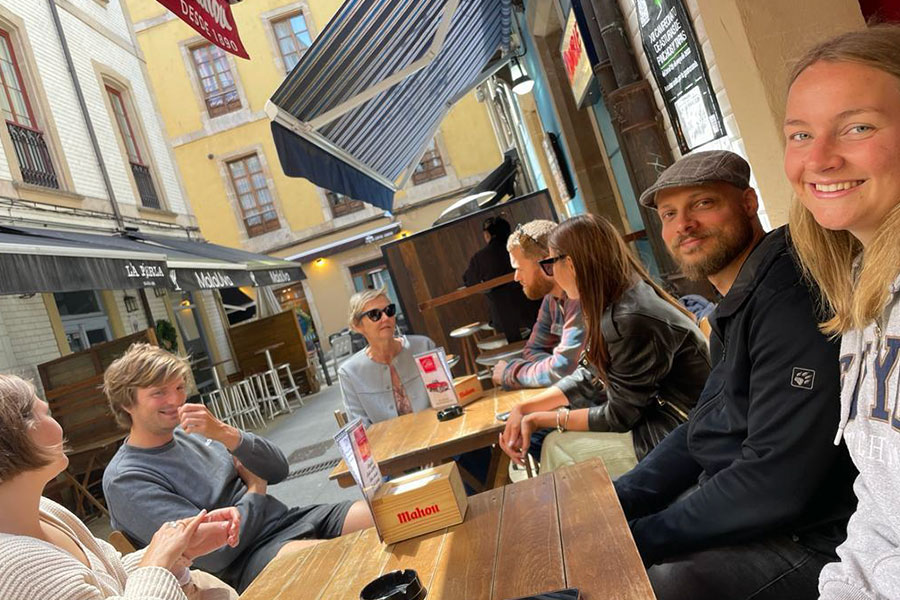
This course is available for all levels, whether you are just getting started with learning or seeking to improve yourself. Our groups are small, consisting of 3 to 12 students, which allows for personalized attention and interaction with others in the class. The course covers learning activities both inside and outside the classroom, offering a comprehensive learning experience. It’s also an excellent opportunity to meet fellow expats living in Asturias and make new connections. The course takes place twice a week throughout the entire year, with each session lasting 90 minutes.
Course contents
A1 Level
Contents:
- Functional:
- Introducing yourself, greeting others, saying goodbye, asking for and giving information, talking about routines and preferences.
- Describing people, places, objects. Expressing basic needs, plans and intentions.
- Grammar:
- Verbs: to be, to have, there is, to like, to want, to be able to.
- Present simple (regular, irregular). Periphrasis: ir a + infinitive.
- Demonstratives and possessives adjectives. Quantitative adjectives and agreement.
- Lexical:
- Personal details, family, free time, routines, city, home, food, weather, transport.
- Sociocultural:
- Greetings, schedules, customs, food, urban life, common expressions.
A2 Level
Contents:
- Functional:
- Talking about the past, expressing desires, tastes, emotions, plans and obligations.
- Describing objects, places and people, asking for and offering help, giving instructions and recommendations.
- Grammar:
- Present perfect and past perfect.
- Near future, verbal periphrases, modal verbs, connectors.
- Comparatives and superlatives, personal and relative pronouns, basic subjunctive.
- Lexical:
- Everyday life, travel, housing, health, shopping, leisure, personal relationships.
- Sociocultural:
- Social norms, courtesy, lifestyle habits, cultural events, cultural differences between Spanish-speaking countries.
B1.1 Level
Contents:
- Functional:
- Narrating biographies and past experiences.
- Talking about habits and changes in life.
- Expressing opinions, hypotheses and emotions.
- Giving advice and reacting to problems.
- Participating in broader social situations.
- Grammar:
- Past simple / continuous / present perfect.
- Expressions with the subjunctive (it is possible that, I think it’s fine that…).
- Verbal periphrases: to finish, to return, to stop.
- Comparisons: more/less than, as… as.
- Conditional structures (1st conditional).
- Verbs of change (to become, to turn into, to come to be).
- Lexical:
- Biographies, stages of life, professions, personal changes.
- Everyday problems, advice, emotions.
- Media, advertisements, messages.
- Humour, jokes, misunderstandings.
- Sociocultural:
- Generational differences, interpersonal relationships.
- Customs and social changes in the Hispanic world.
- Urban vs. rural life.
- Humour and informal language.
B1.2 Level
Contents:
- Functional:
- Report and narrate past events with temporal coherence.
- Give and justify opinions in debates and conversations.
- Express hypotheses, desires, possibilities and conditions.
- React emotionally to situations or news.
- Participate in formal situations and resolve misunderstandings.
- Grammar:
- Past perfect tense, contrasting past tenses.
- Zero, first and third conditionals.
- Subjunctive in subordinate clauses: desire, doubt, assessment.
- Temporal clauses with subjunctive and indicative.
- Reported speech.
- Verbal periphrases: seguir + gerund, llevar + participle.
- Lexical:
- Moods, emotions and personal relationships.
- Health, wellbeing, body and mind.
- Media, current affairs and social networks.
- Culture: cinema, literature, leisure and traditions.
- Work and professional environment.
- Sociocultural:
- Rules of courtesy in different Hispanic contexts.
- Formal vs. informal speech in different countries.
- Cultural stereotypes and their contrasts.
- Language in the media, advertising and social media.
- Linguistic diversity in the Hispanic world.
B2.1 Level
Contents:
- Functional:
- Expressing opinions, desires, emotions, and conditions.
- Assessing situations, making decisions, giving advice.
- Narrating past experiences and talking about hypothetical events.
- Expressing certainty, doubt, probability, and assumptions.
- Arguing, debating, and reformulating ideas.
- Grammatical:
- Present and imperfect subjunctive in subordinate clauses.
- Verbal periphrases and modal structures.
- Reported speech.
- Present and past conditional.
- Reflexive passive, impersonal sentences, and structures with ‘se’.
- Lexical:
- Vocabulary related to everyday life, travel, feelings, communication, society, and culture.
- Idiomatic expressions and frequent collocations.
- Synonymy, antonymy, and lexical connotations.
- Sociocultural:
- Etiquette and behaviour in formal and informal contexts.
- Cultural customs, festivals, traditions.
- Social realities of Spanish-speaking countries.
B2.2 Level
Contents:
- Functional:
- Arguing, debating and responding to ideas accurately.
- Expressing probability, doubt and certainty in a nuanced way.
- Making hypotheses about past, present and future situations.
- Managing and moderating complex conversations.
- Expressing emotions and reactions to other people’s experiences.
- Offering solutions, negotiating agreements and compromises.
- Giving advice, recommendations and warnings.
- Introducing nuances of courtesy, diplomacy and attenuation.
- Grammar:
- • Advanced review of past, present, and future tenses.
- Subordinate clauses of cause, purpose, concession and consequence.
- Mixed conditional clauses.
- Periphrastic and reflexive passive structures.
- Tense agreement in indirect speech.
- Expressions of hypothesis with the compound conditional and the pluperfect subjunctive.
- Verbs to express changes: to remain, to become, to start, to turn into, to arrive at).
- Complex connectors (on the other hand, however, therefore, hence…).
- Lexical:
- Vocabulary related to society, economics and current affairs.
- Vocabulary related to media and technology.
- Vocabulary related to emotions and feelings.
- Advanced idiomatic expressions.
- Resources for nuancing opinions (in my opinion, from my point of view, it seems…).
- Semantic fields related to personal relationships, conflicts and negotiation.
- Frequent collocations in a formal or semi-formal register.
- Vocabulary for expressing temporal and spatial nuances with precision.
- Sociocultural:
- Cultural diversity in Spanish-speaking countries.
- Social values, beliefs and stereotypes.
- Press, social media and public opinion.
- Protocols of courtesy and ways of addressing people according to context.
- Work culture and education in the Hispanic world.
- Artistic expressions and currents of thought.
- Contemporary social issues and topical debates.
C1 Level
Contents:
- Functional:
- Debate logically and coherently, introducing nuances and counterarguments.
- Rephrase, summarise and synthesise other people’s speeches.
- Moderate debates and group dynamics.
- Express informed opinions, with references to sources or authority.
- Justify decisions and positions.
- Express uncertainty, irony and scepticism.
- Display language etiquette in formal and professional settings.
- Suggest, negotiate, and reach consensus on complex matters.
- Handle interruptions, explanations, and responses in a conversation.
- Grammar:
- Complete review of tenses (expert use).
- Complex subordinate clauses (causal, consecutive, concessive, mixed conditional).
- Advanced agreement (tenses, gender, number, style).
- Impersonal and periphrastic passive constructions.
- Verbs of change with nuances (become, turn into, come to be, etc.).
- Modality resources: periphrases of probability, obligation and supposition.
- Advanced reported speech and indirect style.
- Expansion of formal discourse connectors.
- Rhetorical structures and emphasis resources.
- Lexical:
- Current affairs vocabulary: politics, economics, culture, environment.
- Technical and professional vocabulary according to students’ interests.
- Abstract vocabulary (opinion, values, ethics, morals, complex emotions).
- High-level idioms and expressions.
- Nuances and synonyms for lexical precision.
- Set expressions, complex collocations.
- Socio-linguistic vocabulary (formal, academic, technical)
- Sociocultural:
- Current affairs in the Spanish-speaking world
- Politics, media, social trends
- Cultural stereotypes and cultural awareness
- Academic culture: presentations, written work, conference interaction
- Ethical and cultural debates